What is the Hrafntinnusker hut like on the Laugavegur?
Short answer
Hrafntinnusker (Höskuldsskáli) is the highest and most basic hut on the Laugavegur, at about 1,100 m, 12 km and roughly 470 m of climbing from Landmannalaugar. It sleeps 52 in bunks and a mattress loft, with a kitchen with gas stoves and cold water, latrines but no showers. A bed cost 17,000 ISK per night in 2026 and camping about 3,400–3,600 ISK, and the campsite is sometimes on snow.
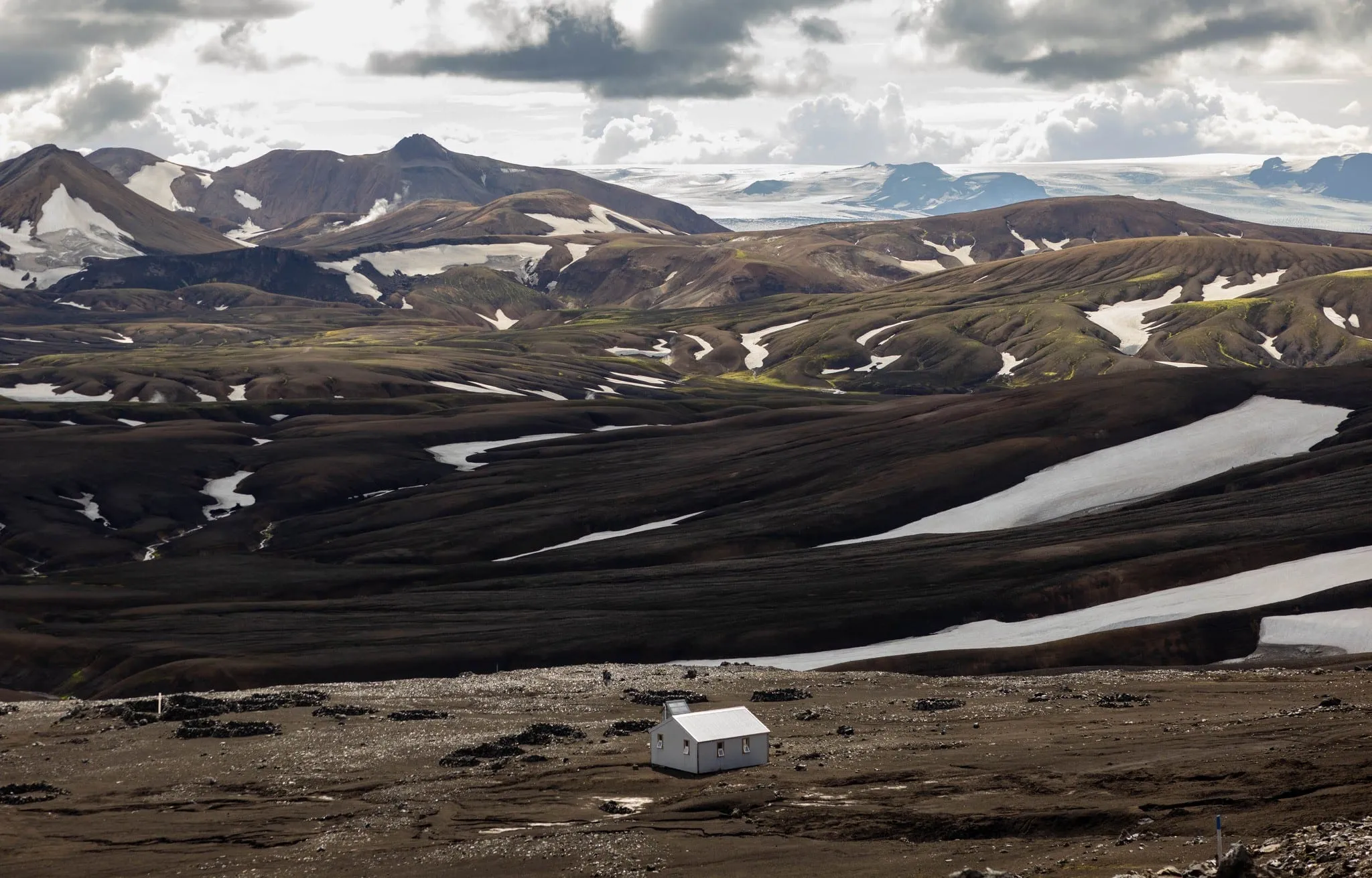
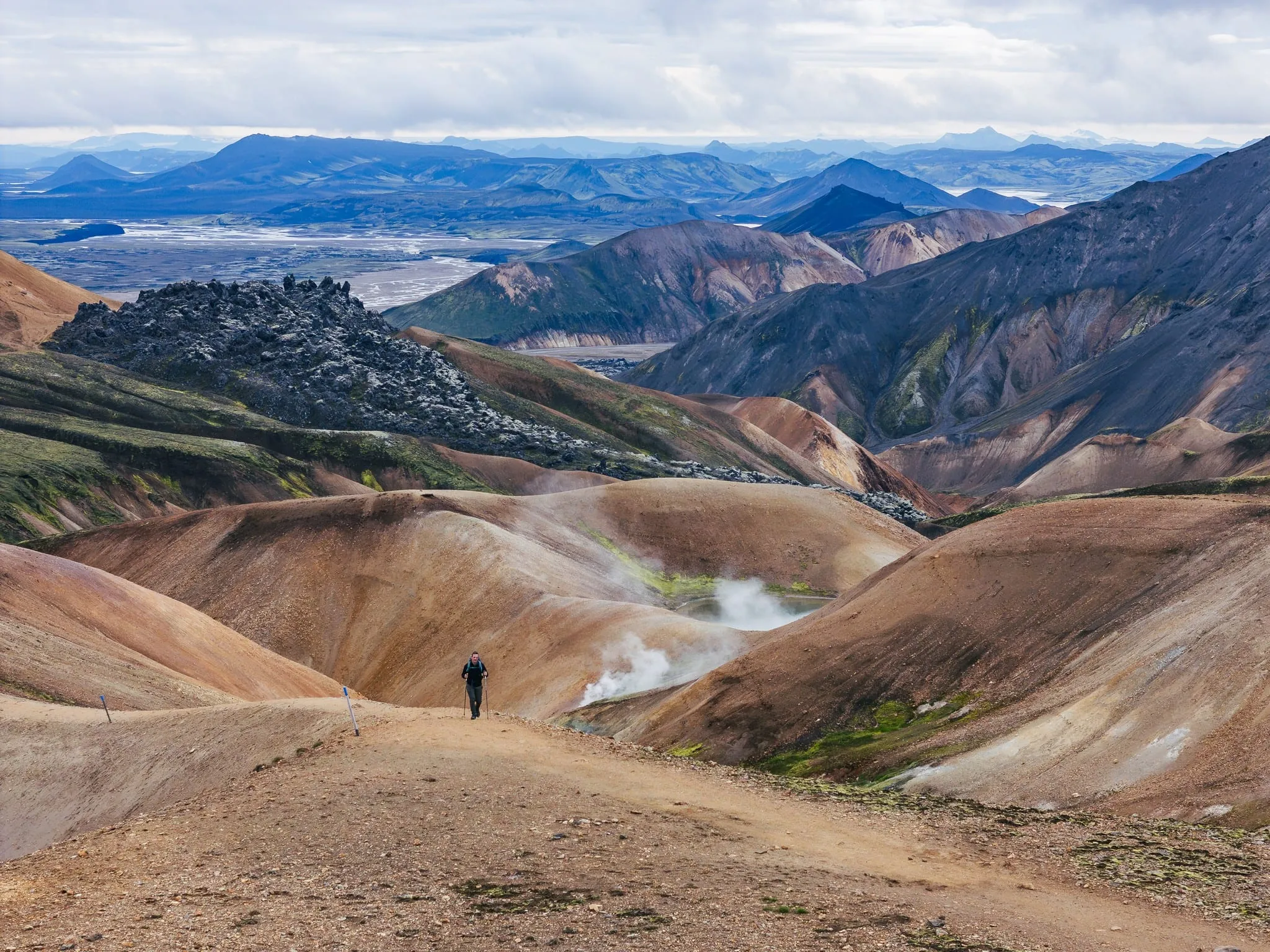
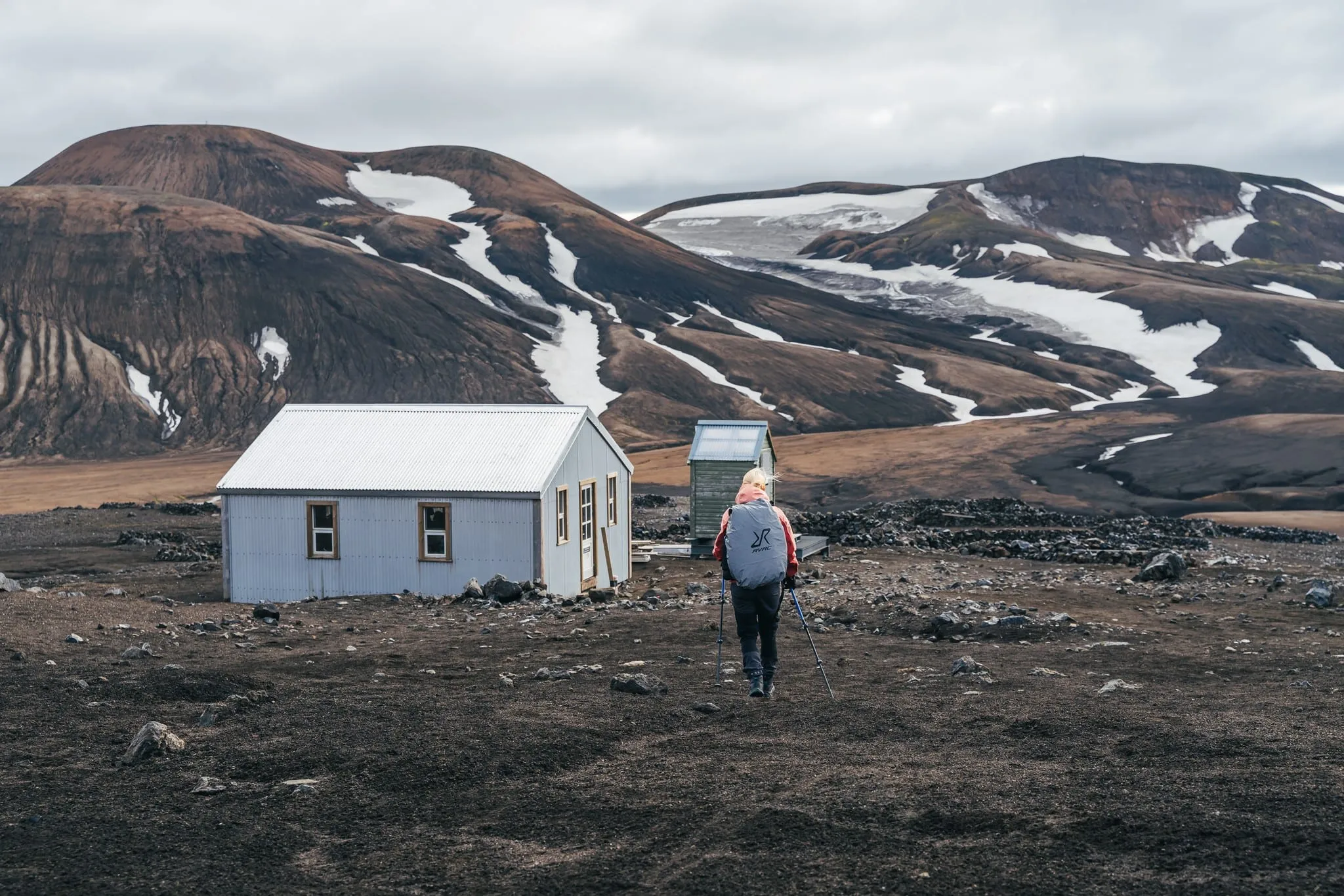
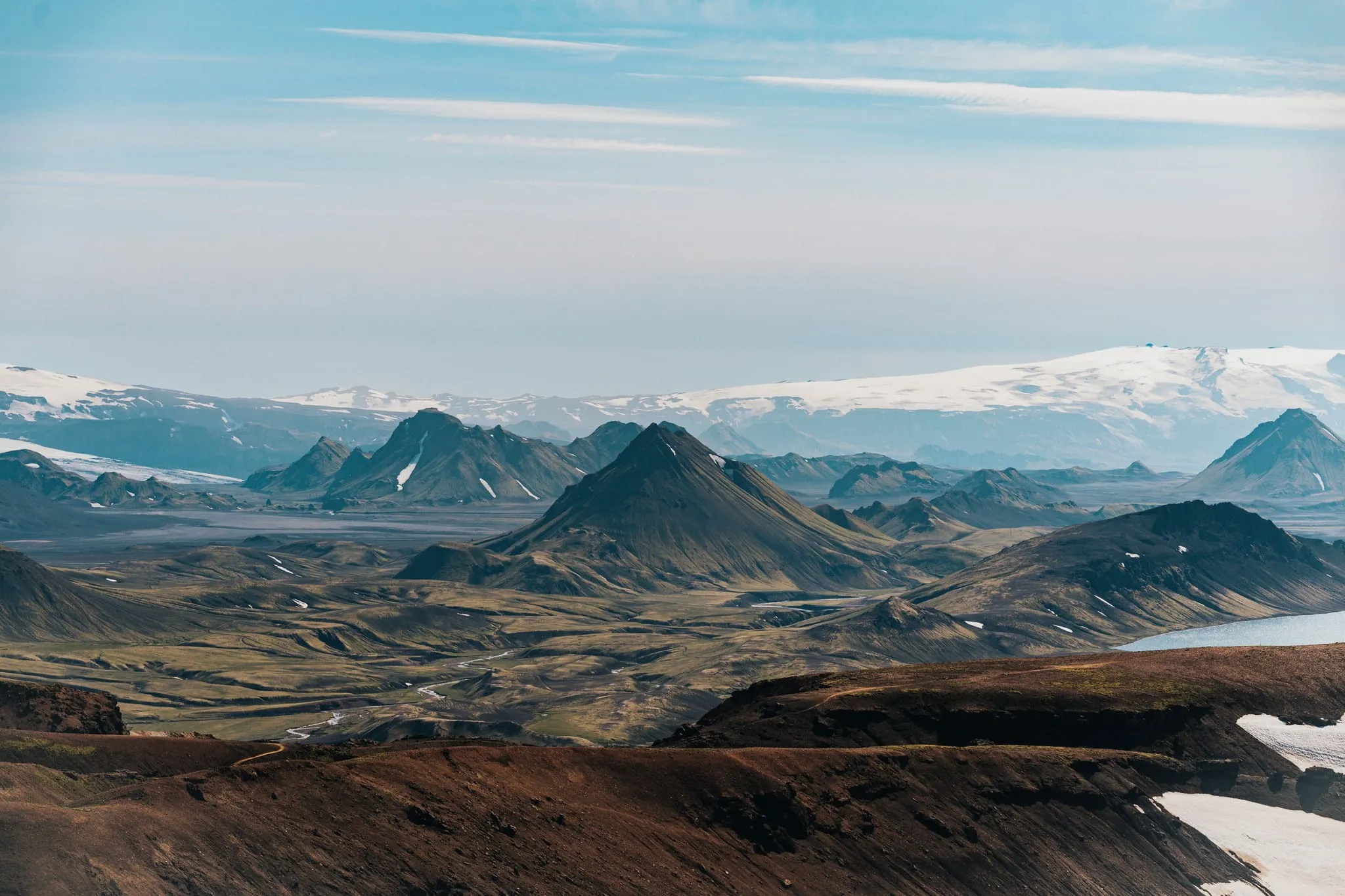
Hrafntinnusker is where most hikers spend their first night on the Laugavegur. It is also the stop people remember most. The hut sits high on a bare plateau of obsidian and snow, often in fog, and it feels a long way from anywhere.
That is part of its charm. But it helps to know what you’re walking into, because this is the coldest and simplest hut on the trail.
Hrafntinnusker at a glance
| Fact | Detail |
|---|---|
| Official name | Höskuldsskáli (Hrafntinnusker hut) |
| Run by | Ferðafélag Íslands (FÍ) |
| Altitude | about 1,100 m, the highest hut on the trail |
| Distance from Landmannalaugar | 12 km, 4–5 h, about 470 m up |
| Next hut south | Álftavatn, 12 km, about 490 m down (or Hvanngil, 16 km) |
| Beds | 52, in bunks and on mattresses in the loft |
| Kitchen | gas stoves, pots and cutlery, cold running water |
| Toilets | latrines with sinks behind the hut, another latrine at the campsite |
| Showers | none |
| Rubbish | none can be left: carry it to Álftavatn |
| Price 2026 | 17,000 ISK per person per night in the hut, camping about 3,400–3,600 ISK |
| Staffed | in summer, typically late June to mid-September |
| Access | on foot only |
The name comes from hrafntinna, Icelandic for obsidian: the black volcanic glass you’ll see glittering all around the hut. FÍ built the first hut here in 1977.
Inside the hut
The hut has two floors. Downstairs you’ll find an entrance hall where boots and wet gear stay, the kitchen and a dormitory with single and double bunks. Upstairs is a loft where you sleep on mattresses side by side.
The kitchen has gas stoves, cooking gear and cold running water. FÍ uses geothermal heat from the gorge just below the hut to keep it warm. You can see some of the pipes on the way down, but please don’t touch them.
What you won’t find:
- No showers. Not in the hut and not anywhere nearby. The next hot shower is at Álftavatn.
- No bedding. Bring your own sleeping bag. At this altitude, a warm one.
- No bins. Everything you carry in, you carry out to the next hut.
- No charging you can count on. Bring a power bank.
There is also an outdoor grill and a separate warden’s hut just west of the main building.
Camping at Hrafntinnusker
The campsite lies just below the hut. Depending on the season, you pitch your tent on sand, gravel or snow. In a snowy year, snow can cover much of the ground well into July.
Campers have their own latrine and a shelter where they can cook and eat out of the wind. That shelter matters, because wind and sleet are common up here even in midsummer. Use a sturdy tent, extra pegs or snow anchors, and a sleeping mat that insulates well. See camping on the Laugavegur for gear tips.
Weather: why this stop is different
At about 1,100 m, Hrafntinnusker is roughly 500 m higher than Landmannalaugar and Álftavatn. That makes a real difference. FÍ warns that thick fog can come in fast here, and that rain or snow showers arrive with little warning.
A few things to keep in mind:
- Follow the marker poles. On the snowfields around the hut, the path can disappear in fog within minutes.
- Talk to the warden. The hut is staffed in summer. Ask about the weather and the snow before you set off the next morning.
- Dress warmly. Keep a hat, gloves and a dry layer for the evening, even in July.
- Leave a travel plan with Safetravel, and install the Safetravel app so you can share your location with 112.
More on this in weather and safety on the Laugavegur.
Short walks from the hut
If you arrive early and the weather is clear, there is plenty to see. Distances come from FÍ.
| Walk | Distance | Time | Note |
|---|---|---|---|
| The gorge below the hut | 0.5 km | about 1 h | easy, geothermal area |
| Söðull | 1–2 km return | 30 min – 2 h | short unmarked climb, good viewpoint |
| Hrafntinnusker peak | 2 km | 1–2 h | easy, views to the west |
| Ice caves (Íshellar) | 5 km | 2–3 h | much smaller than before, risk of collapse |
FÍ’s trail page and its sign at the hut give slightly different figures for Söðull, so we show both. The ice caves are not what they were a few years ago. The ice can collapse without warning, and serious accidents have happened there. Admire them from a distance.
The whole area is a nature reserve. Taking obsidian or other stones is strictly forbidden.
Booking a bed
With 52 beds, Hrafntinnusker is the smallest FÍ hut on the trail. FÍ sells the Laugavegur huts as fixed 3-, 4- or 5-night packages, booked from north to south, and you need a booking before you start. In 2026 a bed cost 17,000 ISK per person per night. Our guide on how to book the Laugavegur huts walks you through it step by step.
Some hikers choose the hut here and camp at the lower stops, because this is where a solid roof helps most. If you’d rather not deal with release dates at all, The Iceland Trail books huts in advance and can add luggage transport between the stops, so you climb to Hrafntinnusker with a day pack.
For the full route, see the Laugavegur stages, day by day.
Sources
FÍ – Hrafntinnusker hut, FÍ – Laugavegur trail and huts, FÍ – Hrafntinnusker trail sign (PDF), FÍ – terms and conditions, Safetravel.